⚠️ Medical Disclaimer:
The content on this page is for educational purposes only and has not been evaluated by the FDA. Mushroom supplements are not intended to diagnose, treat, cure, or prevent any disease. Always consult your doctor before starting new supplements, especially if you are pregnant, nursing, or taking medication (particularly blood thinners or insulin).
Mushroom gummies are convenient, tasty, and easy to take, but the supplement aisle is filled with misleading labels. Many products currently on the shelf contain mostly starch fillers rather than actual mushrooms.
If you are looking to support your focus, energy, or immune system, the difference between a high-quality product and a waste of money often comes down to one detail: Fruiting Body vs. Mycelium.
In this guide, I break down the scientific differences so you can read the label with confidence and choose a product that actually works.
Fruiting Body vs. Mycelium: Understanding the parts
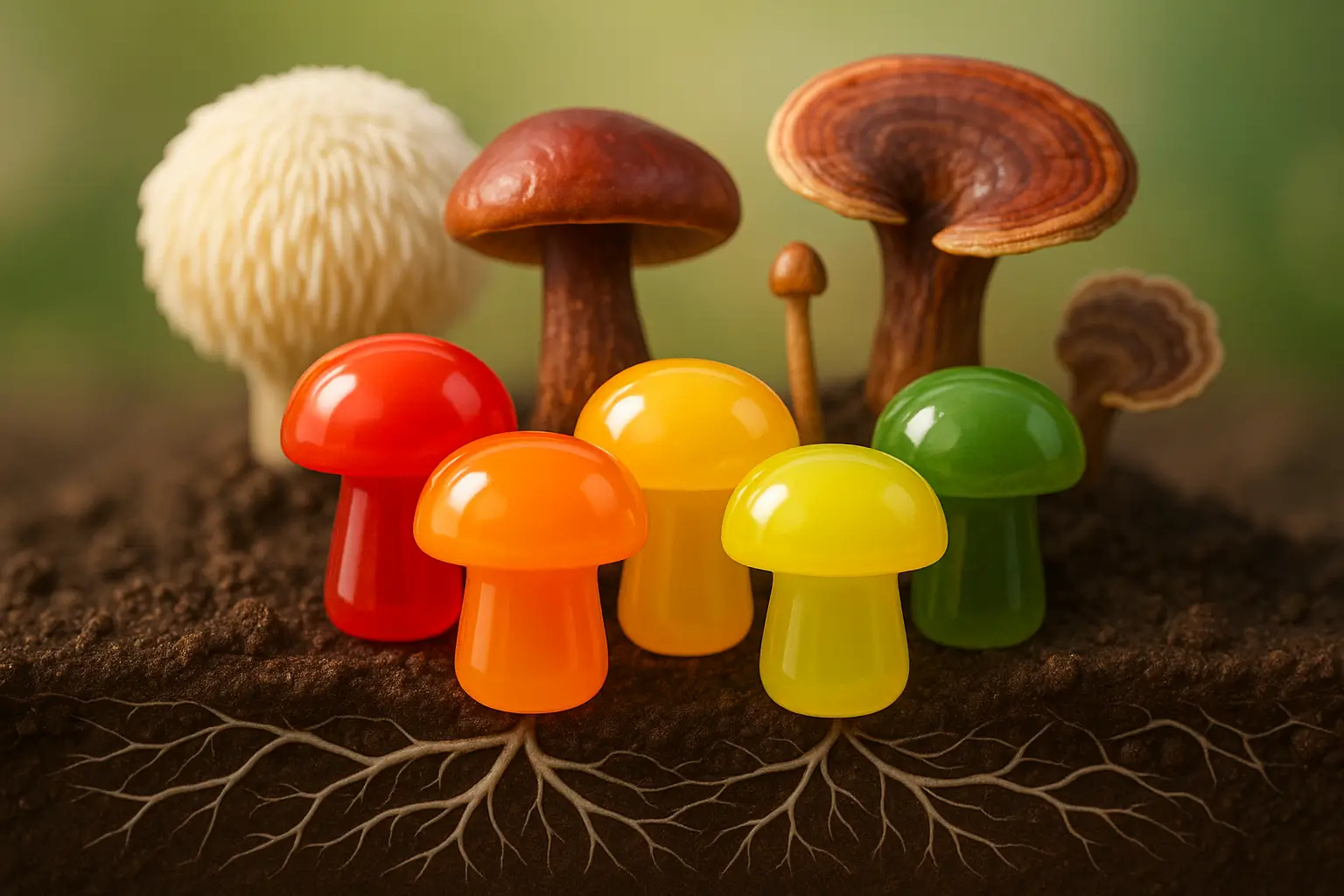
When you buy mushroom gummies, you are getting one of two main parts of the fungal organism.
- The Fruiting Body: This is the cap and stem that you see above ground. Think of this like the “apple” on an apple tree.
- The Mycelium: This is the root system—a web of tiny threads that grows underground or inside a log. Think of this like the “roots” of the tree.
Why This Difference Matters
Research generally indicates that the fruiting body contains the highest concentration of beta-glucans, the active compounds responsible for many of the immune-supporting benefits of mushrooms.
The Problem with “Mycelium on Grain”
Many mass-market gummies use mycelium that is grown in a lab on bags of rice or oats. Because the mycelium cannot be perfectly separated from the grain it grows on, the final product is often ground up with the grain included.
- Fruiting Body Extracts: Typically contain 30–40% beta-glucans.
- Mycelium on Grain: Often contains only 5–7% beta-glucans, with up to 40-50% starch (filler).
When you buy a “Mycelium on Grain” product, you are often paying premium prices for expensive rice powder. For the most potent effects, look for products that explicitly state “100% Fruiting Body” on the label.
What Does “10:1 Extract” Mean?
You will often see ratios like “10:1” or “8:1” on gummy bottles. This refers to the concentration of the mushroom powder.
A 10:1 extract means that 10 grams of raw, dried mushrooms were used to create 1 gram of the final extract.
- Why do we extract? Raw mushrooms contain chitin, a tough cell wall that the human digestive system struggles to break down.
- The Benefit: Hot water or alcohol extraction breaks down this chitin, making the beta-glucans and triterpenoids bioavailable (absorbable) for your body.
Buyer’s Note: A high ratio (like 50:1) isn’t always better if the starting material was low quality. A 1:1 extract of pure organic fruiting body is often better than a 10:1 extract of mycelium-on-grain.
5 Popular Mushrooms Found in Gummies
Different mushrooms are studied for different functional benefits. Here is a quick breakdown of the most common types you will see.
1. Lion’s Mane (Hericium erinaceus)
Best for: Cognitive support and focus.
Lion’s Mane is widely studied for its potential to stimulate Nerve Growth Factor (NGF). It is a popular choice for students or professionals looking to support mental clarity and focus without the jitters of caffeine.
2. Reishi (Ganoderma lingzhi)
Best for: Relaxation and stress support.
Historically known as the “Mushroom of Immortality,” Reishi is an adaptogen often used to support the body’s response to stress. It contains triterpenes, which may help support healthy sleep cycles.
3. Cordyceps (Cordyceps militaris)
Best for: Energy and athletic performance.
Cordyceps is a favorite among athletes. Studies suggest it may help support the body’s production of ATP (energy) and improve oxygen utilization during exercise.
4. Turkey Tail (Trametes versicolor)
Best for: Immune system health.
Turkey Tail is one of the most researched mushrooms in the world regarding immune health. It is rich in Polysaccharide-K (PSK) and Polysaccharide Peptide (PSP), both of which are used to support immune response.
5. Chaga (Inonotus obliquus)
Best for: Antioxidant support.
Chaga is dense with antioxidants, which help the body neutralize free radicals and reduce oxidative stress.
How to read the label
Caption: When checking labels, ignore the front marketing text and look strictly at the “Supplement Facts” panel.
The Red Flags to Watch For:
- ❌ “Mushroom Proprietary Blend”: If a brand hides the exact amount of each mushroom under a “blend,” you have no way of knowing if you are getting a functional dose.
- ❌ “Mycelial Biomass”: This is the industry term for mycelium grown on grain. It implies high starch content.
- ❌ “Other Ingredients”: Watch out for high fructose corn syrup or artificial dyes (Red 40) in cheaper gummies.
A Buyer’s Checklist for Mushroom Gummies
Before you buy, run the product through this 4-point check:
- Check the Source: Does the label say “Fruiting Body”? If it just says “Mushroom Powder,” proceed with caution.
- Check the Dose: Effective doses in studies often range from 500mg to 2000mg. Many gummies only contain 50mg per serving—check the math!
- Check for Beta-Glucans: The best brands list the percentage of beta-glucans on the label (e.g., “>25% Beta-glucans”). This guarantees potency.
- Third-Party Testing: Look for a seal or QR code that shows the product has been tested for heavy metals and purity.
Final thoughts
Mushroom gummies can be an excellent, tasty way to incorporate functional fungi into your daily routine. However, the quality varies wildly between brands.
By sticking to fruiting body extracts and avoiding “proprietary blends” full of grain filler, you ensure you are getting the real benefits these ancient fungi have to offer.
About the Author
Floris is a mushroom cultivator and researcher with over 10 years of experience in mycology. He has successfully cultivated 15+ species of gourmet and medicinal mushrooms and is passionate about helping beginners navigate the science of fungi.